
Revolutionizing Image Editing The Rise of Clothing Remover AI

The Future of Image Manipulation: Unpacking Clothing Remover AI Technology
The advent of artificial intelligence has reshaped numerous industries, and image editing is no exception. Among the most intriguing applications of AI in this field is the clothing remover ai. This innovative technology allows users to alter images in ways previously thought to be possible only through extensive manual editing or complex software. In this article, we’ll explore how clothing remover AI works, its potential applications, ethical considerations, and its impact on the creative industry.
Understanding Clothing Remover AI
Clothing remover AI leverages deep learning algorithms, particularly convolutional neural networks (CNNs), to analyze images and detect clothing items. By training on massive datasets of images, this technology learns to distinguish between various clothing styles, colors, and textures. Once an image is processed, the AI can recreate a version of the image where clothing is removed or altered, achieving results that can look surprisingly realistic.
The Technology Behind It
The fundamental technology behind clothing remover AI is based on generative modeling, often using techniques such as Generative Adversarial Networks (GANs). In a GAN setup, two neural networks—the generator and the discriminator—work against each other. The generator creates images from noise, while the discriminator evaluates them against real images to determine authenticity. Through this adversarial process, the generator progressively improves, producing ever-more convincing alterations.
Moreover, clothing remover AI incorporates advancements in image segmentation, which isolates clothing from the rest of the image. By understanding the contours, edges, and textures associated with clothing, the AI can more effectively manage the removal process without compromising the integrity of the underlying image.
Applications of Clothing Remover AI
Clothing remover AI is finding a variety of applications across several fields:

Fashion Industry
In the fashion industry, designers and marketers can use clothing remover AI to visualize their collections on different models without needing extensive photoshoots. This can drastically cut down costs and time associated with marketing campaigns. Additionally, fashion retailers can provide customers with virtual try-on experiences without the need for physical clothing.
Entertainment and Media
In the entertainment business, clothing remover AI can be utilized for special effects in movies and video games. By allowing creators to easily alter character designs, it opens up avenues for creativity. For instance, it can be used to create historical costumes for characters in period films without the need for elaborate wardrobe styling.
Content Creation and Social Media
For content creators on platforms like Instagram and TikTok, clothing remover AI tools make it easier to produce engaging visuals. Influencers can create innovative content that captures audience attention and enhances their storytelling capabilities.
Ethical Considerations
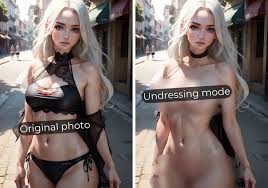
As with any powerful technology, clothing remover AI raises important ethical questions. The ability to easily alter images can contribute to the spread of unrealistic body standards and the manipulation of representations in media. Furthermore, consent is a significant issue: using such tools on images without the subject’s approval can lead to privacy violations and unethical use of technology.
Many in the ethical community advocate for regulations surrounding the use of clothing remover AI. Transparency about when and how these tools are being utilized can help mitigate unethical practices. For instance, clear labeling of altered images can inform viewers when they are looking at manipulated content.
The Impact on Creative Industries
The introduction of clothing remover AI has the potential to democratize certain aspects of the creative industries. With access to AI tools, individuals without traditional artistic training can produce high-quality edits and compositions, similar to what a professional may achieve. This leveling of the playing field could encourage a new wave of content creation, fostering greater diversity in artistic expression.
However, professional artists and designers may face challenges as AI becomes more prevalent. The traditional skill sets associated with image editing may become less valued, as AI tools streamline processes that once required years of training. As such, there could be a shift in the types of skills that are in demand in the creative job market.
Looking Ahead: The Future of Clothing Remover AI
The future of clothing remover AI is undoubtedly promising but also fraught with challenges. As technology continues to evolve, we can expect even more sophisticated tools that push the boundaries of what is possible in image editing. However, it is crucial for the industry to prioritize ethical considerations and user consent, ensuring that tools are used responsibly.
Additionally, as this technology becomes more widely available, users will need to navigate the potential implications of their edits in the context of societal standards and personal privacy. The choices made today regarding clothing remover AI will shape the future of image editing and its role in our daily lives.
Conclusion
Clothing remover AI is a fascinating advancement in the image editing landscape, offering a glimpse into the future of creativity and digitization. As we embrace this technology, we must also remain vigilant about the ethical implications it carries and strive to foster a creative environment where innovation goes hand in hand with responsibility. The next chapter in the world of image editing is just beginning, and the potential is limited only by our imagination.
